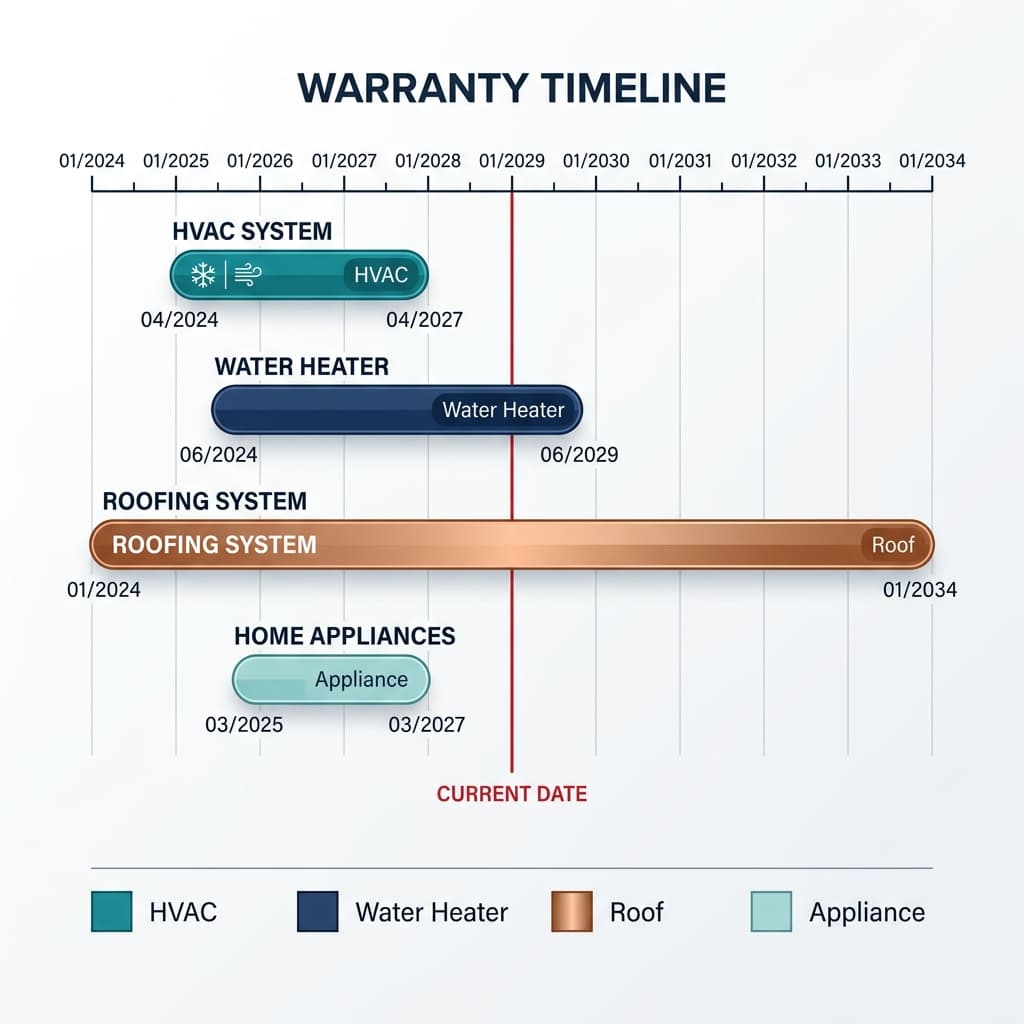
TL;DR: The average homeowner pays $340 per year for repairs that were still under warranty — because they did not know the coverage existed, could not find the paperwork, or missed the claim window. Your home has up to three layers of warranty protection on every major purchase: manufacturer warranty, credit card extended warranty, and optional home warranty plans. Tracking all three requires knowing what you own, when you bought it, and how you paid. This guide shows you how.
Table of Contents
- The $340-Per-Year Mistake
- The Three Layers of Warranty Protection
- Layer 1: Manufacturer Warranties
- Layer 2: Credit Card Extended Warranties
- Layer 3: Home Warranty Plans (Service Contracts)
- How to Set Up a Warranty Tracking System
- What to Do When Something Breaks: Warranty-First Checklist
- Warranty Expiration Alerts: Never Miss a Window Again
- FAQ: Home Warranty Tracking
The $340-Per-Year Mistake
According to ConductorIQ user data, the average homeowner pays for 2–3 repairs per year on items that are still under some form of warranty. The average out-of-pocket cost per missed warranty claim is $115–$170, totaling approximately $340 per year in avoidable expenses.
The problem is not that warranties do not exist. The problem is that homeowners cannot access warranty information at the moment they need it. When your dishwasher breaks at 7 PM on a Tuesday, you are not thinking about digging through a drawer of paperwork to check coverage. You are calling a repair company and paying $250 for a diagnostic visit and parts that the manufacturer would have covered for free.
This pattern repeats across every major home system. HVAC compressors with 10-year warranties get replaced out-of-pocket at year 7 because the homeowner did not know the compressor had a separate (longer) warranty from the unit itself. Water heater tanks with 6-year warranties get replaced at year 4 because the installation receipt is in a moving box from three houses ago.
The fix is a warranty tracking system that lives alongside your home asset inventory — so every time an item needs attention, its warranty status is the first thing you see.
The Three Layers of Warranty Protection
Most homeowners think of warranties as a single thing: the manufacturer's warranty that comes with the product. In reality, your major home purchases may have up to three overlapping layers of coverage.
| Layer | Coverage Source | Typical Duration | You Need |
|---|---|---|---|
| Layer 1 | Manufacturer warranty | 1–10 years (varies by component) | Serial number, purchase date, proof of purchase |
| Layer 2 | Credit card extended warranty | +1–2 years beyond manufacturer | Purchase on qualifying card, original receipt |
| Layer 3 | Home warranty plan (service contract) | Annual renewal | Active plan, service request submission |
When something breaks, check all three layers in sequence. Layer 1 (manufacturer) covers the most with the least friction. Layer 2 (credit card) kicks in when Layer 1 expires. Layer 3 (home warranty plan) is a separate service contract with its own terms and service fees.
Layer 1: Manufacturer Warranties
Every major appliance and home system comes with a manufacturer warranty. The terms vary significantly by product category and even by component within the same product.
Warranty Duration by Product Category
| Product | Parts & Labor | Extended Component Coverage |
|---|---|---|
| Refrigerator | 1 year | Compressor: 5–10 years (sealed system) |
| Dishwasher | 1 year | Stainless steel tub: lifetime (some brands) |
| Washer/Dryer | 1 year | Motor: up to 10 years (direct drive) |
| Range/Oven | 1 year | Cooktop elements: 5 years (some brands) |
| HVAC system | 1 year (parts & labor) | Compressor: 5–10 years (parts only) |
| Water heater | 1 year (parts & labor) | Tank: 6–12 years depending on model |
| Roof shingles | — | Materials: 20–50 years (pro-rated) |
| Garage door opener | 1 year | Motor: 5–10 years; belt: lifetime (some) |
The critical distinction: many manufacturers separate "parts and labor" warranties (short, typically 1 year) from "parts only" warranties (longer, for specific expensive components). When your HVAC tech says "the compressor is out of warranty," they may be referring only to the labor warranty. The part itself might still be covered for another 5 years. Always verify component-level coverage, not just the headline warranty period.
How to Verify Manufacturer Warranty Status
- Locate the model and serial number (label on the product, or in your ConductorIQ asset profile)
- Visit the manufacturer's warranty lookup page (Samsung, LG, Whirlpool, GE, Carrier, Trane all offer online tools)
- Enter the serial number — it often encodes the manufacture date
- Download or screenshot the warranty terms for your records
ConductorIQ auto-populates warranty data when you scan an appliance. One photo. Warranty dates, coverage terms, and claim contact information — all in your asset profile. See how it works.
Layer 2: Credit Card Extended Warranties
This is the most frequently overlooked layer of warranty protection. Many credit cards automatically extend the manufacturer warranty on purchases by 1–2 years at no additional cost. The benefit is baked into the card — you just need to have made the purchase with that card.
Credit Card Warranty Benefits by Issuer
| Card / Issuer | Extension | Per-Claim Limit | Annual Limit |
|---|---|---|---|
| American Express (Platinum, Gold) | +1 year | $10,000 | $50,000 |
| Chase Sapphire Preferred/Reserve | +1 year | $10,000 | $50,000 |
| Citi Double Cash / Premier | +2 years | $10,000 | $50,000 |
| Capital One Venture / Savor | +1 year | $10,000 | — |
| Visa Signature (varies by issuer) | +1 year | $10,000 | — |
| Mastercard World Elite | +1 year | — | — |
Important: Some issuers have reduced or eliminated extended warranty benefits in recent years. Always check your current card's benefits guide — not the benefits from when you opened the account. ConductorIQ tracks which card was used for each purchase so you know exactly which card's warranty program applies.
How to File a Credit Card Warranty Claim
- Contact the card's benefits administrator (not the credit card company's general line — the benefits number is on the back of the card or in the benefits guide)
- Provide: original manufacturer warranty documentation, proof that the manufacturer warranty has expired, proof of purchase on the card, repair estimate or invoice
- The administrator will review and approve/deny the claim
- Approved claims are credited to your card account
Typical processing time: 2–4 weeks. The key to a smooth claim is having all documentation ready — which is exactly what your ConductorIQ asset profile provides.
Layer 3: Home Warranty Plans (Service Contracts)
Home warranty plans (also called home service contracts) are annual subscription products that cover repair or replacement of major home systems and appliances. They are separate from manufacturer warranties and homeowner's insurance.
How Home Warranty Plans Work
You pay an annual premium ($350–$600/year) plus a service fee ($75–$125 per visit). When something covered breaks, you contact the warranty company, they dispatch a contractor from their network, and the contractor diagnoses and repairs the issue. You pay only the service fee.
When Home Warranty Plans Make Sense
Home warranty plans are most valuable when your major systems and appliances are past their manufacturer warranty but not yet at replacement age — roughly years 3–10 for most items. They are also common in real estate transactions where the seller provides a 1-year home warranty to cover the buyer's risk on older systems.
When They Do Not Make Sense
If your appliances are new (still under manufacturer warranty) or very old (likely to be excluded due to pre-existing conditions), a home warranty plan provides limited value. The math is simple: if your annual premium plus likely service fees exceed the expected cost of repairs you would actually claim, the plan costs more than it saves.
ConductorIQ does not sell home warranty plans, but it helps you decide whether one makes financial sense by showing you which items are under manufacturer warranty, which are approaching end-of-life, and what your historical repair costs have been.
How to Set Up a Warranty Tracking System
An effective warranty tracking system needs to answer one question instantly: "Is this item covered right now?" Here is how to build one.
Step 1: Start with Your Asset Inventory
Your warranty tracker is only as good as your asset data. If you have not yet created your home asset inventory, start there. ConductorIQ's AI scanner captures the model and serial number from a single photo and auto-populates warranty dates from manufacturer databases.
Step 2: Record All Three Layers for Each Item
For each major asset, document:
- Manufacturer warranty end date (from the manufacturer's warranty lookup or your records)
- Credit card used for purchase (to determine extended warranty eligibility)
- Home warranty plan coverage (if applicable, from your plan documents)
Step 3: Enable Expiration Alerts
Set alerts for 30 days before each warranty expires. This window gives you time to inspect the item, address any issues while still covered, and decide whether to purchase extended coverage. ConductorIQ sends these alerts automatically for every tracked asset.
Step 4: Store Proof of Purchase Digitally
The number one reason warranty claims are denied is lack of proof of purchase. For every major item, store a digital copy of the receipt or invoice. ConductorIQ's Vault can scan your email for purchase confirmations and link them to the correct asset profile automatically.
What to Do When Something Breaks: Warranty-First Checklist
When a home appliance or system fails, follow this sequence before paying for any repair:
1. Check ConductorIQ (or your tracking system) for warranty status. Open the asset profile. Is it under manufacturer warranty? Is there credit card extended warranty coverage? Is it covered by a home warranty plan?
2. If under manufacturer warranty: Contact the manufacturer's warranty service line (number in your asset profile). Do not call a third-party repair company — manufacturer warranty repairs must be performed by authorized technicians to maintain coverage.
3. If manufacturer warranty expired but credit card coverage applies: Contact your card's benefits administrator. Provide the expired warranty documentation, proof of purchase, and repair estimate.
4. If covered by a home warranty plan: Contact the warranty company's claims line. They will dispatch a contractor. Pay only the service fee.
5. If no warranty coverage exists: Get two repair estimates. Compare the repair cost against the item's remaining useful life and replacement cost. If repair cost exceeds 50% of replacement cost and the item is past 75% of its expected lifespan, replacement is usually the better financial decision.
6. After any repair or replacement: Update the asset profile with the new warranty information, service date, cost, and provider.
Warranty Expiration Alerts: Never Miss a Window Again
The most expensive warranty moment is the one you miss. An HVAC compressor warranty expiring unnoticed means the next failure costs $2,000–$4,000 out of pocket. A credit card extended warranty on a $2,500 refrigerator expiring without a pre-expiration inspection means you cannot claim for issues that were already developing.
ConductorIQ sends warranty expiration alerts at three intervals:
- 90 days before expiration: Advisory notice. Inspect the item for any developing issues.
- 30 days before expiration: Action alert. Schedule a professional inspection if the item is critical (HVAC, water heater, major appliances).
- 7 days before expiration: Final notice. Last chance to file any warranty claims for existing issues.
This three-stage approach ensures you have time to act — not just a single notification that gets buried in your inbox.
Your Home Readiness Score reflects warranty tracking quality in its Warranty Coverage dimension (15% of total score). Tracking all warranties, maintaining active alerts, and using coverage when available pushes this dimension toward the maximum.
FAQ: Home Warranty Tracking
How long do home appliance warranties typically last?
Standard manufacturer warranties for major home appliances last 1–2 years for parts and labor. However, many components have longer coverage: HVAC compressors (5–10 years), water heater tanks (6–12 years), roofing materials (20–50 years), and washer/dryer motors (up to 10 years). Credit card purchase protection can add 1–2 years beyond the manufacturer warranty on eligible purchases.
How do I find out if my appliance is still under warranty?
To check warranty status, you need the appliance's make, model number, and serial number (usually on a label on the back or inside the door). Visit the manufacturer's website and enter these details in their warranty lookup tool. Most major brands (Samsung, LG, Whirlpool, GE) offer online warranty verification. If the purchase date is unknown, the serial number often encodes the manufacturing date.
Does my credit card extend warranties on home appliances?
Many premium credit cards extend manufacturer warranties by 1–2 years. American Express cards typically add 1 year. Chase Sapphire and Citi cards often add 2 years. The key requirement is that the original purchase must have been made with that credit card. Coverage limits are typically $10,000 per claim and $50,000 per year. Check your card's benefits guide for specific terms.
Stop paying for covered repairs. ConductorIQ tracks every warranty across every layer — manufacturer, credit card, and home warranty plan — with automatic expiration alerts.